Overview
You have written your book, or you are close to finishing it. Either way, you are now facing the question that every writer eventually faces: how do I actually get this published? Knowing how to publish a book in the UK involves more options, more decisions, and more opportunities than most first-time authors realise. The good news is that the path to publication has never been more accessible. Whether you want a traditional publisher, prefer to publish independently, or are somewhere in between, this guide walks you through every step clearly and honestly.
Whether you are working with book publishing services UK for the first time or exploring your options before committing to a path, understanding the full landscape first puts you in the best possible position to make the right choice for your book and your goals. Professional book publishing services can support you at every stage, but first let’s make sure you understand exactly what each path involves.
How to Publish a Book: Understanding Your Options in the UK
Before we get into the step-by-step process, it helps to understand the three main paths available to authors in the UK. Each one suits different goals, timelines, and personalities, and knowing which one is right for you shapes every decision that follows.
Traditional Publishing
Traditional Publishing means a publishing company acquires your manuscript, pays for its production, including editing, design, and printing, and distributes it to bookshops and online retailers. You receive a royalty on each copy sold and, typically, an advance payment before publication. The trade-off is that you give up creative control over many decisions and the process takes significantly longer.
Self-publishing
Self-publishing means you take full responsibility for every aspect of publication. You either do the work yourself or hire professionals for book editing, design, and formatting, then upload your finished files to publishing platforms. You keep a much higher percentage of your royalties and retain complete creative control. The trade-off is that you carry all upfront costs and all marketing responsibility.
Hybrid Publishing
Hybrid publishing sits between the two hybrid publishers offer professional production services similar to traditional publishers but the author contributes financially and retains more rights and royalties than a traditional deal would offer. Quality varies widely, so research any hybrid publisher carefully before committing.
Most of what follows covers both traditional and self-publishing paths, with the key differences noted at each stage.

Step 1: Finish and Polish Your Manuscript
This sounds obvious but it deserves saying clearly: you cannot publish a book until you have actually written one. And having a rough draft is very different from having a manuscript that is ready to publish.
Before you take any publishing step, your manuscript needs to be as strong as you can make it on your own. That means completing the full draft, revising it thoroughly, and reading it back with genuinely critical eyes. This is the stage where you address structural problems, pacing issues, underdeveloped characters, or arguments that do not fully hold together.
Writers often submit or publish too early. The excitement of having finished a draft makes it tempting to move quickly. Resisting that impulse and spending the time your manuscript actually needs at this stage pays dividends at every subsequent step.
If you want to write a book and publish it successfully, the quality of the finished manuscript is the single most important factor in whether the book finds readers. Every other step in this guide supports a good manuscript. No publishing path compensates for a weak one.
Step 2: Understand the UK Publishing Market
If you are pursuing traditional publishing in the UK, understanding the market you are submitting to is essential preparation. The UK publishing industry is centered primarily in London and is dominated by a small number of major publishing groups alongside a rich ecosystem of independent publishers.
The major commercial publishers in the UK include Penguin Random House UK, HarperCollins UK, Simon and Schuster UK, Hachette UK, and Pan Macmillan. These are the UK equivalents of the Big Five and they operate through multiple imprints, each with its own editorial focus and aesthetic. Most do not accept direct submissions from authors and work exclusively through literary agents.
Independent publishers like Canongate, Faber and Faber, Bloomsbury, and Hodder Education cover specific niches and sometimes accept direct submissions during open submission windows. For certain categories including poetry, literary fiction, and nonfiction with specialist appeal, independent publishers are often a better fit than the major commercial houses.
The Writers’ and Artists’ Yearbook, published annually by Bloomsbury, is the most comprehensive reference guide to the UK publishing market. It lists literary agents, publishers, submission guidelines, and industry advice and is worth consulting before you begin submitting.
Step 3: Get Professional Editing Before Anything Else
Whether you are pursuing traditional publishing or self-publishing, professional editing is the step that most authors underinvest in and most often regret skipping.
For traditional publishing, a professionally edited manuscript stands out in the submission pile. Agents and editors read hundreds of submissions. A manuscript with structural clarity, clean prose, and a confident voice rises above the noise. One that clearly has not been professionally developed does not make it past the first reader.
For self-publishing, professional editing is even more critical because it is the difference between a book that reads like it was self-published and one that reads like it was not. The most successful self-published authors invest heavily in editing because they understand that the reading experience is what drives reviews, word of mouth, and ongoing sales.
There are several types of editing and they serve different purposes. Developmental or structural editing addresses the big picture: structure, argument, pacing, character, and overall coherence. Line editing works at the paragraph and sentence level, improving flow, clarity, and voice. Copy editing catches grammatical errors, inconsistencies, and factual inaccuracies. Proofreading is the final pass before publication, catching any remaining errors.
Most manuscripts benefit from at least developmental and copy editing before publication. Many need all four stages. The investment in professional editing is almost always recovered through better sales, stronger reviews, and a more professional reputation.
Step 4: How to Find a Publisher or Literary Agent in the UK
If you are pursuing traditional publishing, finding a literary agent is almost always your first real submission step rather than approaching publishers directly.
How to Find a Literary Agent
Most major UK publishers do not accept unsolicited manuscripts. They only consider work submitted through literary agents. This means finding an agent is effectively a prerequisite for reaching the major commercial publishers.
A literary agent represents your work to publishers, negotiates contracts on your behalf, and typically takes fifteen percent of domestic earnings and twenty percent of foreign rights earnings as commission. In exchange, they bring industry relationships, negotiating expertise, and editorial guidance that authors navigating the market alone typically cannot replicate.
To find a literary agent in the UK, research agents who represent your genre and have recently sold books similar to yours. The Writers’ and Artists’ Yearbook, the QueryTracker database, the Manuscript Wishlist website, and individual agency websites are all useful research tools. Build a targeted list of agents whose interests align with your book rather than mass-submitting to anyone who accepts your genre.
Writing a Query Letter
A query letter is the one-page pitch you send to literary agents to interest them in your manuscript. It typically includes a hook that captures the essence of your book in one or two compelling sentences, a brief pitch paragraph summarising your plot or argument, your book’s genre and word count, two or three comparable published titles, and a short author biography.
Your query letter is your first impression and it needs to be as strong as your manuscript. Research each agent’s specific submission guidelines carefully and follow them exactly. Some agents want just a query letter. Others want the first ten pages, a synopsis, or the first three chapters alongside it. Submitting incorrectly signals that you have not done your homework.
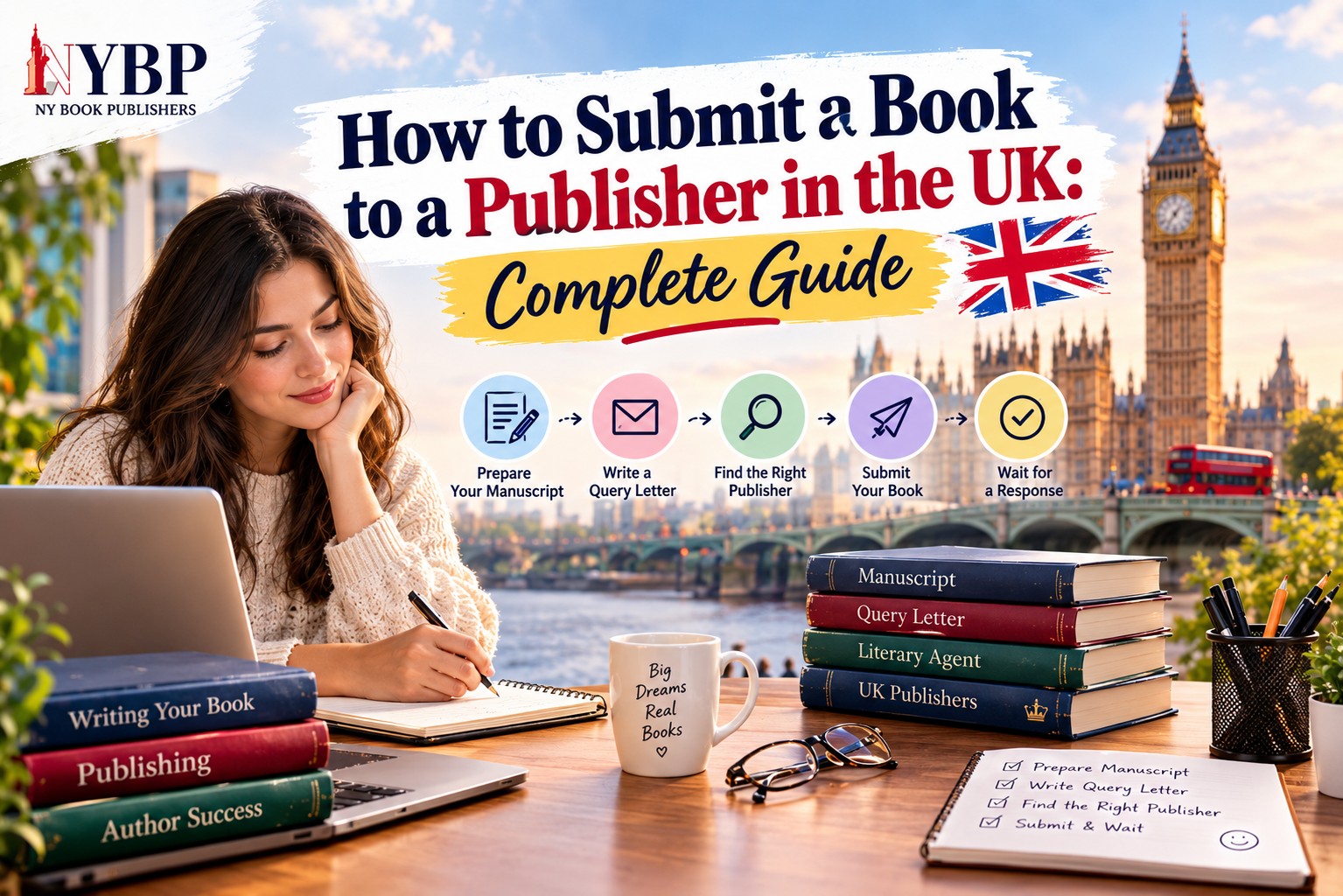
How to Submit a Book to a Publisher Directly
For publishers that do accept direct submissions, particularly independent publishers and specialist presses, the submission process is similar to querying agents. You typically send a query or covering letter, a synopsis of the full book, and a specified number of sample pages or chapters according to that publisher’s guidelines.
Research submission windows carefully. Many independent publishers only accept unsolicited submissions during specific periods of the year. Missing or exceeding these windows means your submission will not be read regardless of its quality.
Step 5: How Hard Is It to Get a Book Published Traditionally?
This is the question most aspiring authors ask at some point, and the honest answer is: it is genuinely competitive, but it is not impossible.
The traditional publishing process involves rejection as a routine and expected part of the journey. Most literary agents accept a very small percentage of the queries they receive, often less than two percent. Most submitted manuscripts do not result in a publishing deal. This is the reality of the traditional path and acknowledging it helps you approach the process with the resilience it requires.
Authors who succeed in traditional publishing are not always the most talented writers in the submission pile. They are often the ones who researched their market thoroughly, targeted their submissions intelligently, wrote query letters that represented their work well, and kept submitting persistently through the inevitable rejections.
How hard is it to get a book published through traditional channels? Hard enough that you should be realistic about the timeline and the effort involved. The process from finishing your manuscript to holding a traditionally published book typically takes two to four years. Querying alone can take six to twelve months or more. Once you have an agent and a publisher, production takes another twelve to eighteen months.
If that timeline does not suit your situation, self-publishing is a genuinely excellent alternative rather than a consolation prize. Some of the most successful authors in the UK market today are independently published.
Step 6: How to Self-Publish a Book in the UK
Self-publishing a book in the UK has become a professional and commercially viable path for authors across every genre. Here is how the process works.
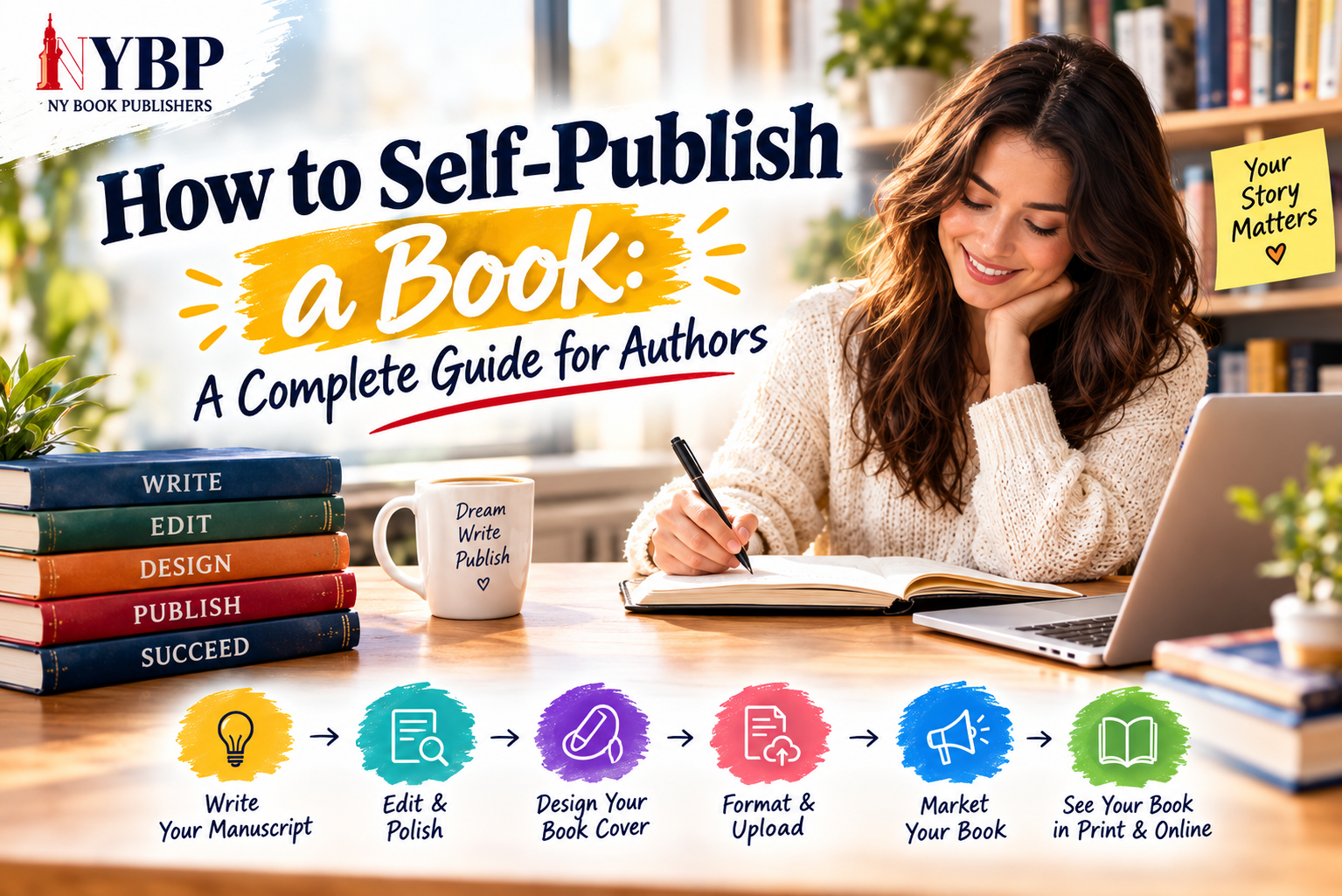
How to Self-Publish a Book Step by Step
Once your manuscript is professionally edited, you need a formatted interior file and a professional book cover before you can publish. Interior formatting prepares your text for print and digital publication according to the technical specifications of your chosen platforms. Cover design creates the visual that will represent your book to readers on Amazon, in library catalogs, and everywhere else your book appears.
Both formatting and cover design can be done yourself using tools like Vellum for formatting and Canva for basic cover design, or hired out to professionals. For a book you are serious about, professional cover design is strongly recommended because cover quality is one of the primary drivers of whether a potential reader clicks on your book or scrolls past it.
How to Publish a Book on Amazon UK
Amazon KDP (Kindle Direct Publishing) is the most important self-publishing platform for UK authors and for most authors worldwide. Publishing through Amazon KDP gives you access to both the Kindle eBook marketplace and the print-on-demand paperback market through KDP Print.
To publish a book on Amazon, you create a KDP account, upload your formatted manuscript file, upload your cover file, fill in your book’s metadata including title, subtitle, description, categories, and keywords, set your price, and choose your royalty option. Amazon’s royalty structure pays seventy percent of the list price for eBooks priced between two pounds and nine pounds ninety-nine, and thirty-five percent for books priced outside that range.
Amazon KDP also offers Kindle Unlimited, a subscription service that pays authors per page read rather than per sale. Enrolling in Kindle Unlimited (called KDP Select) can significantly increase income for authors in genres where Kindle Unlimited readers are active, including romance, fantasy, and thriller.
How to Self-Publish a Book UK Beyond Amazon
IngramSpark is the most important distribution platform for UK self-published authors who want their books available through channels beyond Amazon. IngramSpark distributes to physical bookshops, libraries, and online retailers worldwide including Waterstones, Blackwell’s, and international markets.
Publishing through both KDP and IngramSpark gives you maximum reach: Amazon’s enormous direct-to-consumer market combined with Ingram’s wholesale distribution network that supplies the physical retail and library channels.
Draft2Digital and Smashwords (now merged) are additional distribution platforms that aggregate your eBook across multiple retailers including Apple Books, Barnes and Noble, Kobo, and library platforms like OverDrive, typically through a single upload.
Step 7: How to Publish a Children’s Book in the UK
Publishing a children’s book follows the same broad paths as other books but with some important specific differences worth understanding.
How to Get a Children’s Book Published in the UK Traditionally
For traditionally published children’s picture books, the most important thing to understand is that publishers pair authors with illustrators themselves. Do not submit your picture book manuscript with amateur illustrations unless you are a professional illustrator submitting your own artwork. Sending your own illustrations alongside a text submission can actually hurt your chances with traditional publishers.
The major UK children’s book publishers include Puffin, Hodder Children’s Books, Walker Books, Scholastic UK, and Usborne. Many accept submissions only through literary agents, while some have direct submission windows for specific categories.
Children’s book literary agents have different interests from adult book agents. Research agents who specifically represent children’s books and who have recently sold titles in the age category you are writing for: picture books, early readers, middle grade, or young adult.
How to Publish a Children’s Book UK Through Self-Publishing
Self-publishing a children’s picture book is more complex and more expensive than self-publishing a text-only book because you need professional illustration. Quality illustration for a thirty-two-page picture book from a professional illustrator typically costs between two thousand and ten thousand pounds or more, depending on the illustrator’s experience and reputation.
Once illustrated, the book needs professional design and layout, full-color printing, and distribution. Print-on-demand services like IngramSpark handle full-color printing but at a per-unit cost that is significantly higher than black-and-white printing, which affects your pricing and royalty calculations.
Many self-published children’s book authors order a print run from a commercial printer, typically one thousand to three thousand copies, to bring the per-unit cost down to a level where the book can be priced competitively. This requires upfront investment in inventory and the responsibility of managing storage and fulfilment.
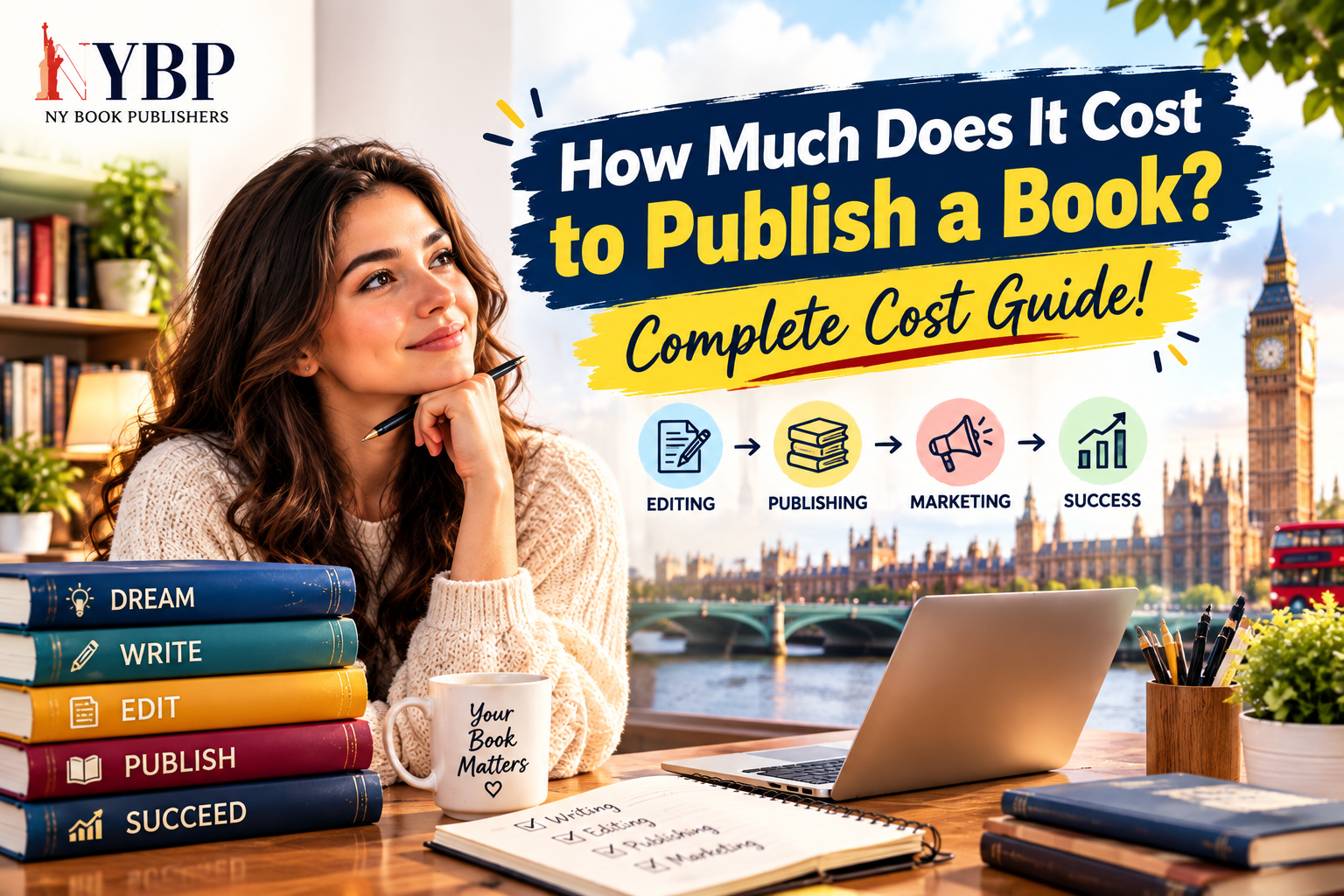
Step 8: How Much Does It Cost to Publish a Book in the UK?
The cost of publishing varies enormously depending on the path you choose and the level of professional involvement at each stage.
Traditional Publishing Costs
Traditional publishing costs the author nothing upfront in a genuine traditional deal. The publisher pays all production costs and typically pays an advance against future royalties before the book is published. If you are paying a traditional-style publisher for publication, it is not a traditional publisher.
Self-Publishing Costs in the UK
Here is a realistic cost breakdown for a professionally self-published book in the UK:
| Service | Budget Range | Professional Range |
| Developmental editing | £500 to £1,500 | £1,500 to £4,000+ |
| Copy editing | £300 to £800 | £800 to £2,000 |
| Proofreading | £150 to £400 | £400 to £900 |
| Cover design | £200 to £500 | £500 to £1,500 |
| Interior formatting | £100 to £300 | £300 to £800 |
| ISBN purchase | £89 (single) | £164 (10 ISBNs) |
| Marketing and launch | £200 to £1,000 | £1,000 to £5,000+ |
For a children’s picture book, add professional illustration costs of £2,000 to £10,000+ to these figures.
These are investment ranges, not fixed costs. Authors who cut corners on editing and design consistently produce books that sell poorly and damage their reputation. Authors who invest appropriately in professional production consistently produce books that are competitive in the market.
Step 9: Obtain Your ISBN
An ISBN (International Standard Book Number) is the unique identifier that allows bookshops, libraries, and distributors to identify and stock your book. In the UK, ISBNs are purchased through Nielsen Book UK at isbn.nielsenbook.co.uk.
A single UK ISBN costs £89 including VAT. A block of ten ISBNs costs £164 including VAT. Each format of your book, the eBook, the paperback, and the hardcover, requires its own ISBN, so purchasing a block of ten is usually more economical for authors planning to publish in multiple formats.
Amazon KDP offers a free ISBN for books published through their platform, but this ISBN is owned by Amazon rather than by you. If you plan to distribute your book widely through multiple channels beyond Amazon, purchasing your own ISBN through Nielsen gives you ownership and full distribution flexibility.
Step 10: Register Your Copyright
In the UK, copyright in your written work is automatic from the moment you create it. You do not need to register your copyright separately or pay a fee for protection. As soon as your book exists in written form, you hold the copyright.
That said, there are practical steps you can take to establish evidence of your copyright if it is ever disputed. Keeping dated drafts of your manuscript, emailing a copy to yourself with a dated timestamp, and depositing a copy with a solicitor all create evidence of when you created the work.
The UK’s legal deposit law requires publishers to send a copy of every published work to the British Library and potentially five other national libraries. For traditionally published books, the publisher handles this. For self-published books, this legal obligation falls to you as the publisher.
Step 11: Publish Your Book
Once your manuscript is edited, your cover is designed, you have your ISBN, and your files are formatted correctly, you are ready to publish.
For self-publishing on Amazon KDP, the process involves creating your KDP account, entering your book details and metadata, uploading your cover and manuscript files, previewing the result in KDP’s online previewer, setting your price and royalty structure, and submitting for review. Amazon typically reviews and publishes books within 24 to 72 hours.
For IngramSpark, the process is similar but requires your files to meet Ingram’s specific technical specifications, which are somewhat more demanding than KDP’s requirements. IngramSpark also charges a setup fee per title, though this is sometimes waived during promotional periods.
How to publish a book for free is technically possible through KDP’s free ISBN and their no-upfront-cost model, but a truly free publication means skipping professional editing and design, which almost always shows in the finished product and affects sales negatively.
Step 12: Promote and Market Your Book
Publishing your book is the beginning of the sales journey, not the end. Without promotion, even excellent books go unread.
Your marketing approach will be different depending on your publishing path. Traditionally published authors have a publisher’s marketing and publicity team to work with, though the level of support varies considerably between publishers and titles. Self-published authors are entirely responsible for their own marketing.
For all authors, some core promotional activities are universally important. Building an email list of readers gives you a direct marketing channel that no algorithm can affect. Establishing a social media presence on the platforms where your target readers spend time creates ongoing visibility. Seeking reviews on Amazon and Goodreads builds the social proof that drives purchasing decisions. And creating a professional author website gives you a home base that you own and control regardless of what happens to any social media platform.
How to get your book published and then found by readers requires understanding that promotion is a sustained long-term activity rather than a one-time launch event. Authors who promote consistently over months and years consistently outperform those who invest heavily at launch and then go quiet.
Best Publishers for New Authors UK: What to Look For!
For first-time authors pursuing traditional publishing in the UK, identifying publishers who are genuinely open to debut talent is important.
Best publishers for new authors in the UK include independent presses with active direct submission programs. Bloodaxe Books, Serpent’s Tail, And Other Stories, and Gallic Books are among the independent publishers with strong reputations for discovering new literary voices. For commercial fiction, the major imprints of the Big Five houses do publish debut authors, but almost exclusively through the literary agent route.
Best UK publishers for first-time authors in children’s books include Puffin, Orion Children’s Books, and Scholastic UK, though again most require agent representation for picture books and novels.
The question of how to find a publisher for your book as a first-time author is really a question of how to find the right agent first, because agents are the primary route to the publishers with the resources and distribution to make a meaningful commercial impact.
How Old Do You Have to Be to Publish a Book in the UK?
There is no minimum age to publish a book in the UK. Anyone can self-publish a book regardless of age. For traditional publishing, contracts are legally binding documents and anyone under eighteen would typically need a parent or guardian to sign on their behalf, though the writing itself can be done at any age.
Several notable authors published their first works as teenagers. If age is a concern for any young aspiring author reading this, it should not be a barrier to starting the writing and publishing journey.
Can Anyone Write a Book and Get It Published?
Yes. In the modern publishing landscape, anyone who has written a book can publish it. Self-publishing platforms have removed the gatekeeping function that once made publishing exclusive. Anyone with a completed manuscript can upload it to Amazon KDP and have it available for sale within days.
The more accurate question is whether anyone can write a book and get it traditionally published, and the honest answer is that traditional publishing remains selective. Not every book will find an agent or a traditional publisher. But anyone who writes a strong book, submits it to the right people in the right way, and persists through the process has a genuine chance.
Getting Published in the UK: NY Book Publishers Can Help!
Navigating the UK publishing landscape involves more decisions, more technical steps, and more professional expertise than most first-time authors expect. Having the right support at each stage makes every part of the process more manageable and the finished product more professional.
NY Book Publishers UK offers comprehensive book publishing services for authors at every stage of their journey. From manuscript development and professional editing to cover design, formatting, distribution setup, and marketing strategy, their team brings the expertise to take your book from finished manuscript to published, professionally produced title that competes effectively in the UK market.
Whether you want to self-publish with professional support or need help preparing a manuscript for traditional submission, NY Book Publishers understands the UK publishing landscape and brings genuine expertise to every project they take on.
Wrapping Up
Understanding how to publish a book in the UK, and actually doing it, are two very different things. But the distance between those two points is now smaller than it has ever been. The tools, the platforms, the professional services, and the community support available to UK authors in 2026 make publication accessible to anyone who writes something worth reading and is willing to approach the process with patience and professionalism. Whether you choose traditional publishing, self-publishing, or a hybrid approach, every path starts in the same place: with a completed manuscript you believe in. Write it well, prepare it professionally, choose your path thoughtfully, and commit to the promotional work that follows publication. Knowing how to publish a book is the first step. Taking it with confidence, clarity, and the right support behind you is how your book finds the readers it was written for.
Frequently Asked Questions
How do I publish a book in the UK?
You have two main options. For traditional publishing, finish your manuscript, find a literary agent through research and targeted querying, and allow the agent to submit your work to publishers on your behalf. For self-publishing, have your manuscript professionally edited and designed, obtain an ISBN through Nielsen Book UK, and upload your formatted files to platforms like Amazon KDP and IngramSpark for distribution to UK and international markets. Both paths require a polished, professionally prepared manuscript to succeed.
How much does it cost to publish a book in the UK?
Traditional publishing costs the author nothing upfront. The publisher pays all production costs and typically pays an advance against future royalties. Self-publishing requires the author to fund professional editing, cover design, formatting, and marketing. Realistic costs for a professionally self-published book in the UK range from approximately £1,500 to £8,000 or more depending on the level of professional involvement at each stage. A single UK ISBN costs £89 through Nielsen Book UK.
Can I publish a book in the UK without a publisher?
Yes. Self-publishing allows you to publish your book entirely independently through platforms like Amazon KDP and IngramSpark without any involvement from a traditional publisher. You retain full creative control and a significantly higher percentage of your royalties. Many successful UK authors publish entirely independently and earn more per book than they would through a traditional publishing deal, though they carry all production costs and marketing responsibility themselves.
Do I need to copyright my book before publishing?
No. In the UK, copyright is automatic from the moment you create your written work. You do not need to register or pay for copyright protection. It exists as soon as your book exists in written form. You can strengthen your evidence of copyright by keeping dated drafts, emailing yourself copies with timestamps, or depositing a copy with a solicitor, but formal registration is not required or available in the same way it is in some other countries.
What are the steps to publishing a book?
The key steps are: finish and revise your manuscript thoroughly, invest in professional editing appropriate to your publishing path, decide between traditional and self-publishing based on your goals and timeline, find a literary agent if pursuing traditional publishing or proceed to design and formatting if self-publishing, obtain your ISBN, design a professional cover and format your interior, upload to your chosen publishing platforms, set your price and metadata, and commit to an ongoing promotional strategy that builds momentum over time rather than treating launch day as the end of your marketing effort.