Starting
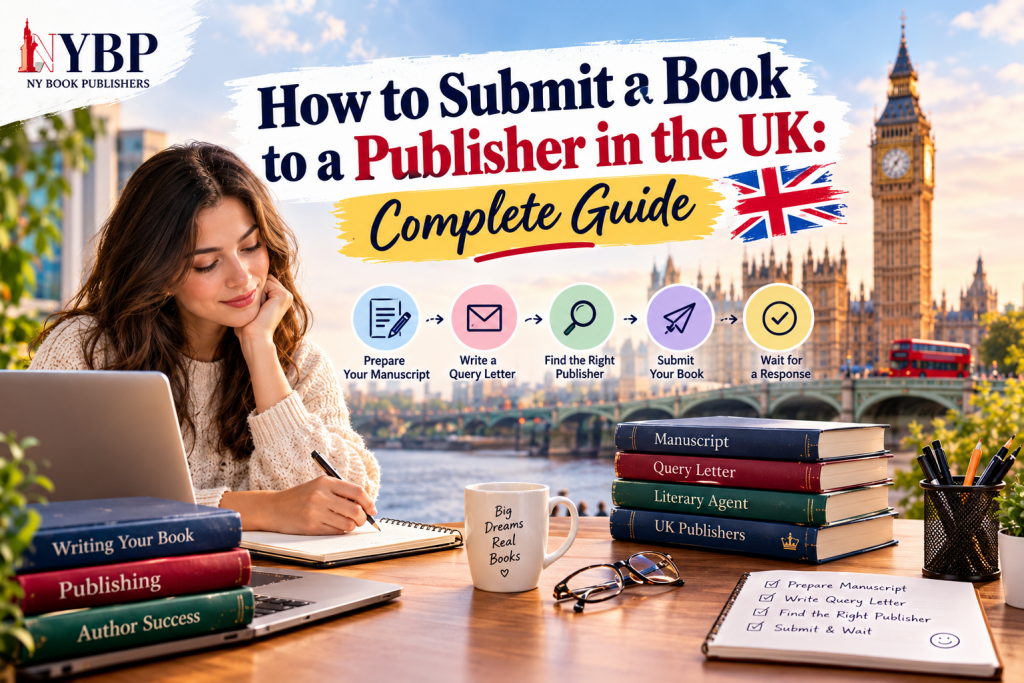
You have written your book. You have revised it, read it back, and revised it again. Now comes the part that most writers find both exciting and nerve-wracking in equal measure: actually submitting it and hoping someone on the other side says yes. Knowing how to submit a book to a publisher the right way is one of the most practical skills any aspiring author can develop. A great manuscript submitted incorrectly, to the wrong person, in the wrong format, or at the wrong time rarely gets the attention it deserves. A strong submission done properly gives your work its best possible chance.
Whether you are working with a book publishing company for professional support or exploring the submission process independently, and whether you are considering traditional publishing or a self-publishing company for independent release, this guide walks you through everything you need to know about submitting your book in the UK market. Every step, every document, and every common mistake is covered clearly and practically.
How to Submit a Book to a Publisher: Understanding the UK Landscape First
Before you prepare a single submission document, it helps to understand how the UK publishing industry is structured. This understanding changes who you submit to, in what order, and with what expectations.
The UK traditional publishing industry operates through a gatekeeper system. Most major commercial publishers, including Penguin Random House UK, HarperCollins UK, Simon and Schuster UK, Hachette UK, and Pan Macmillan, do not accept unsolicited manuscripts from authors directly. They only consider work submitted through literary agents who have existing professional relationships with their editors. This means that for most authors pursuing traditional publishing in the UK, the submission process is actually a two-stage process. First, you submit to literary agents. Then, once you have agent representation, your agent submits to publishers on your behalf.
There are exceptions. Independent publishers, small presses, university presses, and specialist publishers often do accept direct submissions from authors, particularly during open submission windows. Poetry publishers, children’s book publishers of certain types, and nonfiction specialists in specific fields sometimes accept direct queries without requiring agent representation. Understanding which type of publisher you are targeting determines whether your first submission goes to an agent or directly to a publisher. Get this wrong and you waste months submitting to the wrong doors.
Step 1: Prepare Your Manuscript Properly Before Submitting
Knowing how to submit a book to a publisher starts before you write your query letter or research your submission targets. It starts with making sure your manuscript is genuinely ready to be seen.
Most rejected manuscripts are rejected not because the concept is weak but because the execution was not ready. Authors who submit too early, before the manuscript has been thoroughly revised and professionally edited, undermine their own chances before anyone has had the chance to evaluate their work fairly.
Your manuscript needs to be complete before you submit it. Agents and publishers do not consider unfinished fiction manuscripts. For nonfiction, you can sometimes submit a proposal before the full manuscript is written, but even then your book writing samples need to be polished to the highest standard.
Standard manuscript formatting in the UK submission context means double-spaced text, twelve-point Times New Roman or similar readable font, one-inch or 2.5cm margins, page numbers, your name and title in the header of each page, and a word count on the title page. Follow these conventions unless the submission guidelines you are following specify something different.
Investing in professional book editing before you submit to agents or publishers is not required, but it significantly improves your manuscript’s chances. Agents read hundreds of submissions. A manuscript that reads with the clarity, pace, and polish of a professionally edited work stands out immediately.
Step 2: Write a Compelling Query Letter
The query letter is the document that introduces your book to a literary agent or publisher and convinces them to read further. It is typically one page long and needs to accomplish several things in a very short space.
A strong UK query letter has four essential components working together.
- The opening hook is one to two sentences that capture the essence of your book in the most compelling way possible. Think of it as the logline, the single sentence that makes someone want to know more. It should establish the genre, the central premise, and the emotional or intellectual stakes immediately.
- The pitch paragraph is where you summarize your book in three to five sentences. For fiction, cover the protagonist, the central conflict, the stakes, and what makes the story distinctive without revealing the ending. For nonfiction, explain the core argument or premise, the intended audience, and why this book is needed now. The pitch paragraph is the hardest part of the query to write well and the most important. Read published back-cover copy for books similar to yours and study how they capture attention and create desire in a few sentences.
- The book details include genre, word count, and two or three comparable published titles from the last three to five years. Comparable titles, often called comps, show the agent that you understand your market and give them a quick sense of where your book sits commercially. Choose titles that are successful enough to be meaningful but not so enormous that the comparison feels unrealistic.
- The author biography is a brief paragraph about you. Include relevant publishing credits if you have them, professional credentials that relate to your book’s subject matter for nonfiction, platform or audience information if applicable, and any other context that establishes your credibility as the right person to have written this book. If you are a debut author with no publishing credits, keep the bio short and honest. Every agent and publisher was once working with a debut author for the first time and this alone is not a barrier.
Personalise every query letter. Each letter should include a brief sentence explaining why you chose this specific agent, referencing a book they represent, an interview where they discussed what they are looking for, or a direct connection between their stated interests and your manuscript. Mass-submitting a generic letter signals that you have not done your research and reduces your chances considerably.
Step 3: Write a Synopsis
The synopsis is a document that tells the agent or publisher the complete story of your book, including the ending, in a condensed form. Unlike the query letter pitch, which teases and withholds, the synopsis tells everything. Its purpose is to show the reader that your story or argument is structurally sound and satisfying from beginning to end.
Most UK agents ask for a one- to two-page synopsis alongside their initial submission requirements, though some request longer synopses of up to five pages. Always follow the specific word count or page length requested by each agent.
Writing a strong synopsis is a skill in its own right and one that many authors find challenging. The synopsis needs to convey what happens at each major turning point of your narrative or argument, how the characters develop and change, and how the central conflict resolves. It needs to do this efficiently without reading like a dry plot summary, maintaining enough of your voice and the book’s emotional stakes to give the reader a genuine sense of what the experience of reading the book will be like.
Write your synopsis in present tense and in third person, even if your book is written in first person. Focus on the main narrative throughline rather than every subplot and secondary character. Every sentence should be earning its place by conveying essential information about structure, character development, or thematic resolution.
Step 4: Prepare Your Sample Pages
Most agent submission guidelines in the UK ask for a specified number of sample pages alongside the query letter and synopsis. This might be the first ten pages, the first three chapters, or the first fifty pages depending on the agent.
Your sample pages are the most important element of your submission package because they are where the agent reads your actual writing. Everything else in the package creates the context and the expectation. The pages determine whether the agent wants to read more.
Always submit the opening pages of your book rather than pages from the middle, even if you think a later section shows your writing at its strongest. The agent needs to experience how you open your book and establish your voice, world, and stakes from the beginning. If your opening pages are not strong, the answer is to strengthen them before submitting, not to submit different pages.
Format your sample pages according to the same standard manuscript formatting described earlier. Double-spaced, twelve-point readable font, standard margins, page numbers. Unless the submission guidelines specify otherwise, send your sample pages in the body of an email rather than as a separate attachment, as many agents prefer not to open attachments from unknown authors.
Step 5: Research Your Submission Targets Thoroughly
Targeted submissions dramatically outperform mass submissions in the UK publishing market. An agent who represents exclusively literary fiction cannot do anything with your commercial thriller regardless of its quality. A children’s book publisher focused on picture books has no use for your young adult novel.
Here is how to research your submission targets effectively.
The Writers’ and Artists’ Yearbook, published annually by Bloomsbury, is the most comprehensive guide to UK literary agents and publishers. It includes detailed listings of each agency’s submission requirements, the genres they represent, recent deals they have made, and individual agent profiles within each agency. It is updated every year, so use the most current edition.
QueryTracker and the Manuscript Wishlist are online databases that allow you to search for literary agents by genre and see what each agent is actively looking for. The Manuscript Wishlist in particular has become increasingly valuable because agents voluntarily post detailed descriptions of the specific types of books they want to receive right now.
Publishers Marketplace is a subscription service that tracks publishing deals across the industry. It allows you to search by genre and agent to see who has recently sold books similar to yours, which tells you both that an agent represents your type of book and that they have been able to place it successfully.
Agency websites are essential reading for any agent on your list. Most UK agencies post individual agent profiles that describe each agent’s specific tastes and current interests in detail. Some agents update these profiles frequently and provide very granular guidance about what they are and are not looking for at any given time.
Build a spreadsheet to track your submissions. Include the agent’s name, agency, submission date, what you sent, and their stated response time. The submission process for a single manuscript can involve dozens of queries sent over many months and staying organised prevents duplication, missed follow-ups, and confusion about where your manuscript currently sits.

How to Submit a Book Manuscript to a Publisher: The Submission Package
Once you know who you are submitting to, you need to assemble your complete submission package according to their specific requirements. Submission requirements vary between agents and between publishers, which is why reading and following each one’s guidelines exactly is so important.
Here is a summary of the typical elements a UK submission package might include:
| Document | What It Contains | Typical Length |
| Query letter | Introduction, pitch, comp titles, author bio | One page |
| Synopsis | Complete plot or argument including ending | One to five pages |
| Sample pages | Opening chapters of manuscript | Varies: 10 pages to 3 chapters |
| Full manuscript | Complete, polished manuscript | Only when requested |
| Book proposal (nonfiction) | Overview, market analysis, chapter outline, samples | 20 to 50 pages |
Never send a full manuscript unless it has been specifically requested. Sending an unrequested full manuscript signals that you have not read the submission guidelines and makes a poor first impression. Send only what has been asked for, in the format that has been specified.
How to Submit a Children’s Book to a Publisher in the UK
Submitting a children’s book follows the same broad principles as adult book submission but with some specific differences that are important to understand clearly.
How to Submit a Picture Book to a Publisher
For picture books aimed at children aged three to eight, the submission process differs from novel submissions in several important ways.
Picture book manuscripts are very short, typically five hundred to eight hundred words, which means the full text often fits on a single page. Most agents and publishers ask for the complete picture book text in the initial submission rather than sample pages, because the complete text of a picture book is roughly equivalent to the sample pages of a novel.
Do not include book illustrations with your picture book submission unless you are also a professional illustrator submitting your own artwork. Publishers and agents pair authors with illustrators themselves. Sending amateur illustrations alongside a picture book text can actually work against you by creating the impression that you expect the publisher to use your illustrations, which they almost certainly will not.
What publishers and agents evaluate in a picture book submission is the quality of the text: the rhythm of the language, the strength of the story arc within a very short word count, the emotional resonance of the subject matter for both child and adult reader, and the specific quality that makes this particular story worth the considerable investment of professional illustration.
How to Submit a Children’s Novel to a Publisher
For middle grade novels (ages 8 to 12) and young adult novels (ages 12 to 18), the submission process is much closer to adult novel submission. You prepare a query letter, a synopsis, and sample pages or chapters according to the specific submission guidelines of each agent or publisher you approach.
Children’s book literary agents and children’s book publishers are a distinct subset of the market. Research specifically children’s book agents rather than general literary agents, as agents who do not represent children’s books cannot help you regardless of how good your manuscript is.
How to submit a children’s book to a publisher directly, bypassing the agent route, is possible with some independent children’s book publishers and specialist presses. Walker Books, Usborne, and Scholastic UK have historically had open submission programs at various times, though the details change and should be verified directly on their websites before you submit.
How to Submit a Book Proposal to a Publisher
For nonfiction books, the submission process often involves a book proposal rather than or alongside a complete manuscript. A book proposal makes the commercial and intellectual case for your book before the full manuscript is written.
A complete UK nonfiction book proposal typically includes several distinct sections.
The overview is a one to three page summary of the book, its central argument or premise, its intended audience, and why this book is needed now. It should establish both the intellectual substance of your argument and its commercial appeal to a clearly defined readership.
The market analysis identifies who will buy this book and provides evidence that this audience exists in meaningful numbers. It demonstrates awareness of competing titles and explains clearly how your book differs from and improves upon what already exists. Publishers are investing significant resources in your book and they need to see evidence that the investment is commercially justified.
Comparable titles serve a similar function in a proposal to their function in a query letter. Choose three to five recent, successfully published books in your category and explain specifically how your book is similar to them (in appeal and audience) and different from them (in content, angle, or approach).
The chapter outline is a section-by-section breakdown of the complete book, typically a half-page to one page per chapter. It shows the publisher that your argument has been thought through completely and that the structure is logical and coherent from beginning to end.
Sample chapters are usually two or three chapters from different parts of the proposed book, demonstrating your writing ability and the depth of your knowledge. Include your introduction and one or two body chapters that show the full range of your approach.
The author biography in a nonfiction proposal is particularly important because your credentials and platform directly affect the commercial viability of the book. Publishers want to know that you have the expertise to write this book and the audience to help sell it.
How to Submit My Book to a Publisher: Common Mistakes to Avoid!
Understanding how to submit a book to a publisher also means understanding the mistakes that get submissions rejected before they have been properly evaluated.
- Submitting before the manuscript is ready is the single most common and most costly mistake. A rough draft submitted too early creates a bad first impression with an agent who might have been receptive to a polished version of the same story six months later. You can only make a first impression once.
- Not following submission guidelines tells the agent immediately that you have not done your research. If an agent’s guidelines say to send the first ten pages in the body of the email with no attachments, sending a PDF attachment of your first three chapters is a reason for a rejection before anyone has read your work.
- Writing a generic query letter that has not been personalised for the specific agent is immediately recognizable and suggests either laziness or that the author is mass-submitting without targeting. Both impressions are negative.
- Submitting simultaneously to agents at the same agency is generally considered poor form. Most agents assume you are querying other agents simultaneously at different agencies, which is standard and expected. But submitting to multiple agents at the same agency at once can create awkward internal situations and is usually prohibited in the guidelines of most agencies.
- Querying too broadly means submitting to agents who clearly do not represent your genre because you have not done your research. A literary fiction agent receiving a cozy mystery query wastes everyone’s time and creates a negative impression.
- Following up too soon is a common anxiety-driven mistake. Most UK agents have stated response times of four to twelve weeks for initial queries. Following up before that period has elapsed is not appropriate. If an agent has stated that no response after a certain period means no, respect that policy rather than sending chaser emails.
How to Find Publishers That Accept Manuscripts in the UK
For authors who want to submit directly to publishers without first seeking agent representation, finding publishers that accept unsolicited manuscripts requires specific research.
Independent literary publishers with histories of accepting direct submissions in the UK include Galley Beggar Press, And Other Stories, Unbound, and Melville House UK. Most of these publishers specialise in literary fiction and have specific submission windows or open submissions programs that change over time.
The Spread the Word organization and Mslexia magazine both maintain updated lists of UK publishers and competitions accepting direct submissions from writers without agent representation, which are useful resources to check regularly.
For nonfiction, university presses including Manchester University Press, Bristol University Press, and Edinburgh University Press sometimes accept direct submissions from academics and specialists writing for professional audiences in specific disciplines.
Poet publishers including Bloodaxe Books, Faber and Faber, Carcanet Press, and Seren Books are among the UK poetry publishers with established submission processes for new and emerging poets, though competition for their lists is significant.
How Do I Submit My Book to a Publisher: Self-Publishing as an Alternative Path
Understanding how to submit a book to a publisher in the traditional sense is important, but so is understanding when self-publishing is a better strategic choice.
For some books and some authors, self-publishing through a professional self-publishing company is not a fallback position but the right first choice. Books on niche topics with clearly defined specialist audiences, books in rapidly evolving fields where the traditional publishing timeline of two to four years is too slow, and books where the author already has a substantial platform and audience often perform better and earn more as self-published titles than they would through a traditional deal.
The traditional submission process involves significant time investment across the querying, representation, and submission stages. For authors whose goals include seeing their book in readers’ hands within a year, or for authors whose books do not fit neatly into the commercial categories that traditional publishers work with, professional self-publishing provides a viable, credible, and potentially more financially rewarding path.
How NY Book Publishers UK Can Help With Your Submission
Navigating the submission process, from preparing a polished manuscript to writing a compelling query letter, synopsis, and proposal, involves significant professional writing skill beyond the writing of the book itself. NY Book Publishers UK supports authors through every stage of the UK publishing journey. Whether you need help preparing your manuscript for traditional submission, developing a compelling book proposal, or taking the self-publishing path with professional support for editing, design, and distribution, their team brings genuine expertise to each part of the process. Having experienced professionals help you prepare your submission materials ensures that your manuscript makes the strongest possible first impression, which in a competitive market makes a genuine and meaningful difference to your chances of success.
To Sum Up – Submitting Your Book Is a Skill Worth Developing!
Learning how to submit a book to a publisher in the UK is not a one-time event. It is a learnable, improvable skill that becomes more effective with research, practice, and honest feedback. Every submission you make, whether it results in a request for more material or a polite rejection, teaches you something about the market, your manuscript, and your approach that makes the next submission stronger. The authors who find representation and publication are not always the most talented writers in the submission pool. They are almost always the ones who understood how the process works, targeted their submissions with genuine precision, prepared their materials with professional care, and kept going through the inevitable setbacks with resilience and a genuine belief in their work. Your manuscript deserves the best possible chance. Learning how to submit a book to a publisher in the right way, to the right people, at the right time, is how you give it that chance.
Frequently Asked Questions
How do I submit a book to a publisher in the UK?
For most major publishers in the UK, you first need a literary agent who will submit on your behalf. To find an agent, prepare a query letter, synopsis, and sample pages according to each agent’s submission guidelines, then submit to agents who represent your genre. For independent publishers that accept direct submissions, submit your query letter and manuscript materials directly according to their posted guidelines. Always research each submission target carefully and follow their instructions exactly.
Can I submit my book directly to a publisher in the UK?
Yes, but only to publishers that accept unsolicited submissions. Most major commercial publishers in the UK require agent representation and do not accept direct author submissions. However, many independent publishers, small presses, university presses, and specialist publishers do accept direct submissions, often during specific open submission windows. Research your target publishers carefully to confirm their current submission policy before preparing your materials.
Do I need a literary agent to publish a book in the UK?
You need a literary agent to access most major commercial publishers in the UK. Without agent representation, your manuscript will not be considered by publishers like Penguin Random House UK, HarperCollins UK, or Hachette UK. However, you do not need an agent to submit to independent publishers that accept direct submissions, and you do not need an agent to self-publish through platforms like Amazon KDP or IngramSpark. Whether you need an agent depends entirely on which publishers you are targeting and which publishing path you choose.
What should I send to a UK publisher with my manuscript?
The standard UK submission package includes a query or covering letter introducing yourself and your book, a synopsis of the complete work including the ending, and sample pages or chapters according to the publisher’s specific requirements. For nonfiction, a full book proposal typically replaces or supplements the manuscript. Never send your full manuscript unless it has been specifically requested. Always check the individual submission guidelines for each publisher you approach and follow them exactly, as requirements vary significantly between publishers and literary agencies.
How do I find publishers that accept manuscripts in the UK?
Research using the Writers’ and Artists’ Yearbook, which lists UK publishers and their submission policies. Check individual publisher websites for open submission windows, as these change regularly. Organizations like Spread the Word and publications like Mslexia maintain updated lists of publishers currently accepting direct submissions. For literary agents, QueryTracker, the Manuscript Wishlist, and Publishers Marketplace are useful databases for identifying agents actively seeking manuscripts in your genre.